How to Save ££££s on Your House Extension
Planning a house extension? Discover four practical ways to reduce your extension costs without compromising on the things that matter most.
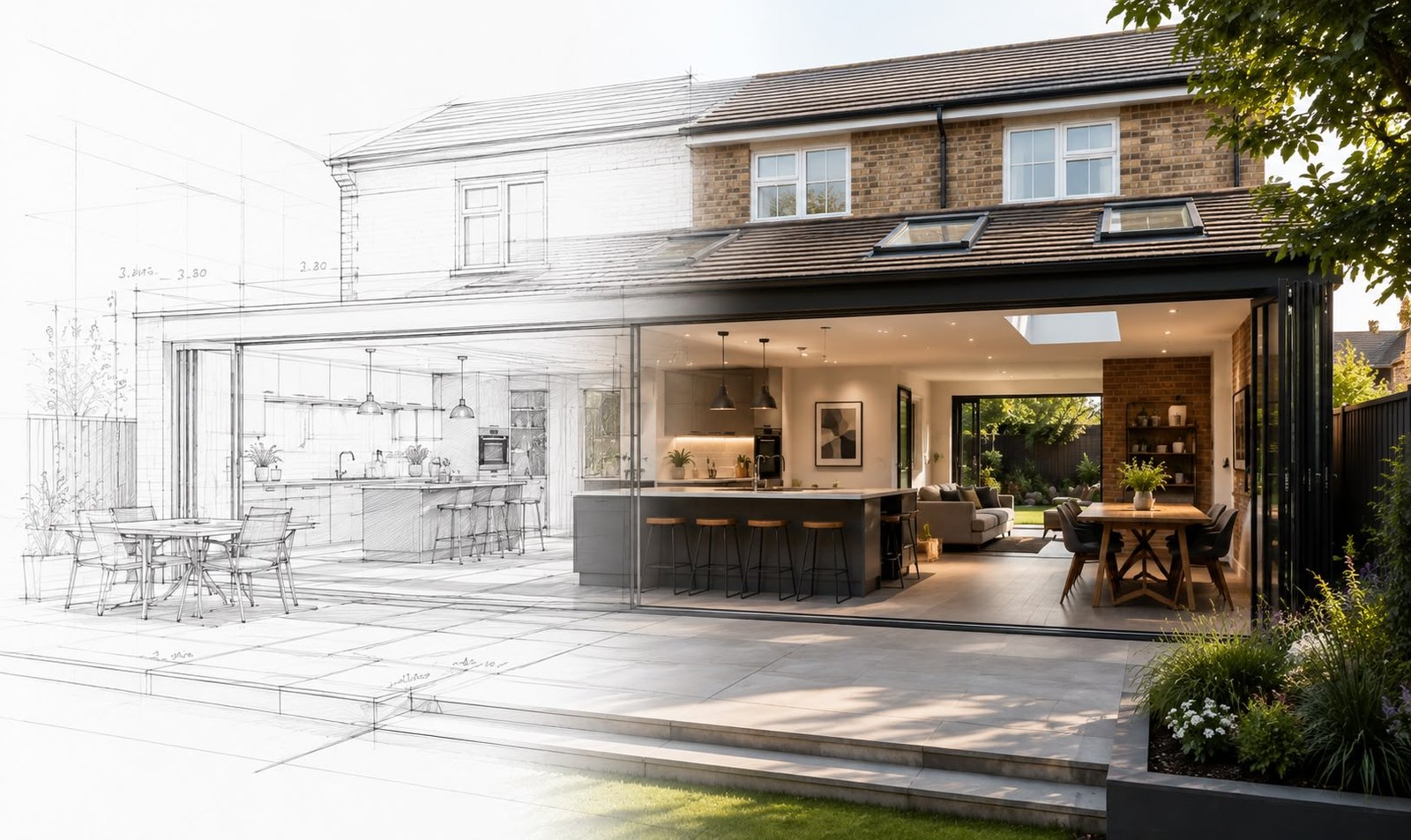
Building an extension doesn't have to mean choosing the cheapest option everywhere. The biggest savings often come from making better decisions early. Here are four places to start.
1. Start with what you need — not everything you want
It sounds boring, but this is where reality can actually save you a lot of money. Ask yourself:
- How much additional space do we actually need?
- What problem are we trying to solve?
- Could a better layout achieve the same result with less floor area?
- Which features would genuinely improve how we live? Adding another few square metres may not sound significant, but every additional square metre means more foundations, walls, roof, insulation, flooring, heating and finishes.
Build the space you need, not simply the biggest extension you can fit.
2. Find the right professional — and make sure they listen
A good architect, architectural technician or designer isn't just there to produce drawings. Someone experienced in extensions can often find a smarter way of using the existing house. A clever layout might remove the need for an extra 5–6m² of extension. Depending on your project and location, that could potentially save £10,000 or more in construction costs. Look for someone who:
- Has relevant extension experience.
- Understands your budget from the beginning.
- Challenges unnecessary space rather than automatically making the project bigger.
- Actually listens to how you want to use the house.
Good design isn't necessarily about adding more. Sometimes it's about achieving more with less.
3. Shop around wisely — expensive doesn't always mean better
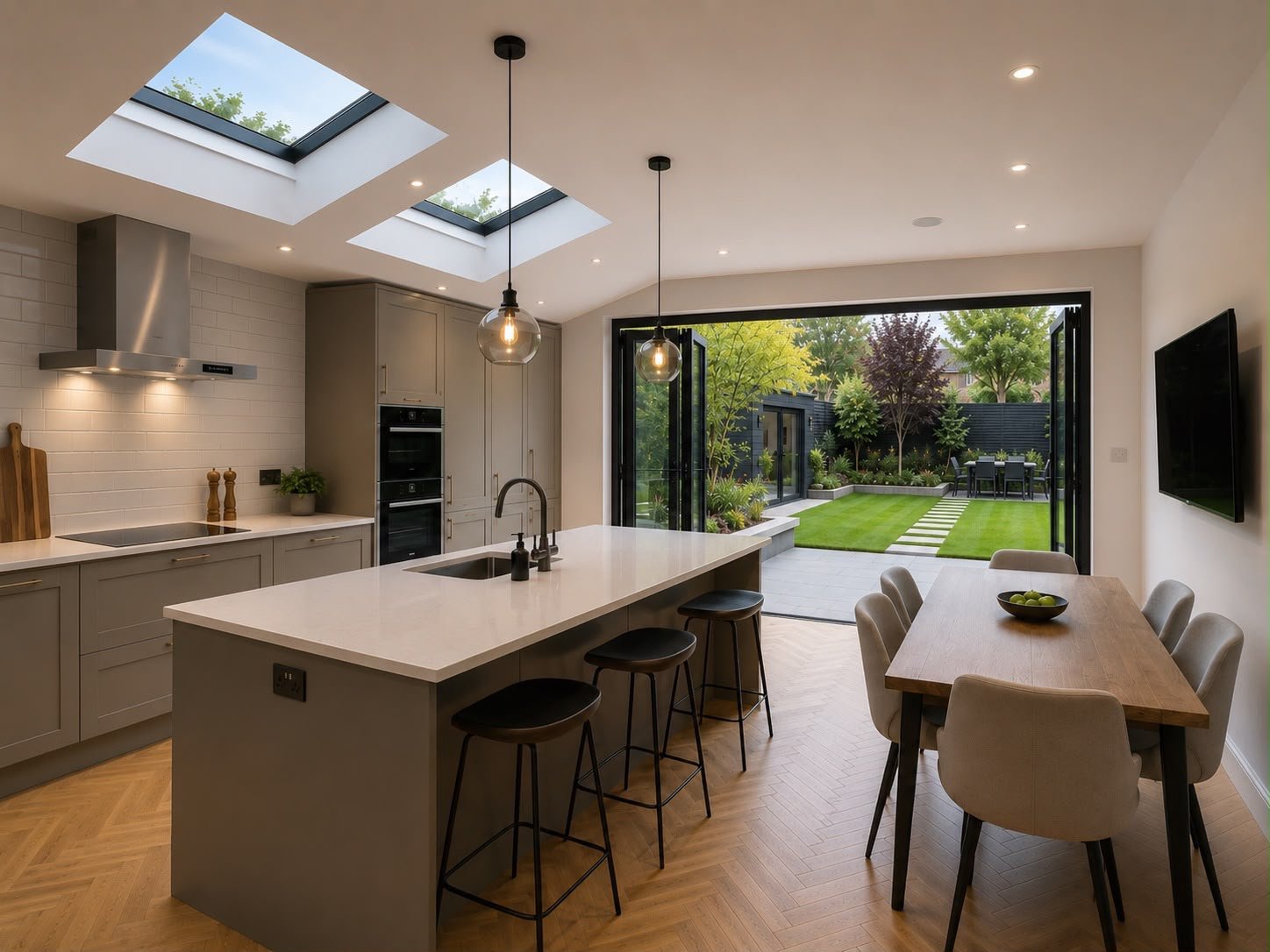
You don't need a luxury brand for everything to create a high-end-looking home. For example, a well-designed kitchen using good-quality units from a mainstream supplier, combined with carefully chosen worktops, handles, lighting and finishes, can look far more expensive than it actually is. Instead of buying purely by brand:
- Check what the doors and cabinets are actually made from.
- Compare MDF/chipboard construction and thickness.
- Order samples where possible.
- Compare hinges, runners and internal fittings.
- Spend more on the details you can actually see and feel.
- Look beyond the showroom styling and sales pitch.
Trust the product and your own judgement — not just the marketing.
4. Make a priority list
Before you start choosing finishes, decide what really matters to you.
Must-haves
Maybe yours are:
- A large kitchen island.
- A light and airy open-plan space.
- Large doors overlooking the garden.
- Good natural light.
Nice-to-haves
Perhaps:
- A completely bespoke utility room.
- Designer storage.
- Premium branded cabinetry.
- Bespoke joinery throughout. If the kitchen island is something you'll use every day, protect that part of the budget. But does the utility room really need thousands of pounds of bespoke cabinetry? A clever combination of standard units, worktops and storage might perform exactly the same job for considerably less.
Spend properly on the things that matter to you. Be ruthless with the things that don't.
Before You Start Spending
The easiest time to control your extension budget is before construction begins. Use the BuildCostHub Extension Cost Calculator to get an initial estimate and understand how your project's size, specification and design choices could affect your budget. Calculator link: https://www.buildcosthub.com/#project-types
Start with your budget. Prioritise what matters. Then design around it.
Planning a similar project?
Get a realistic UK cost estimate before speaking to builders.